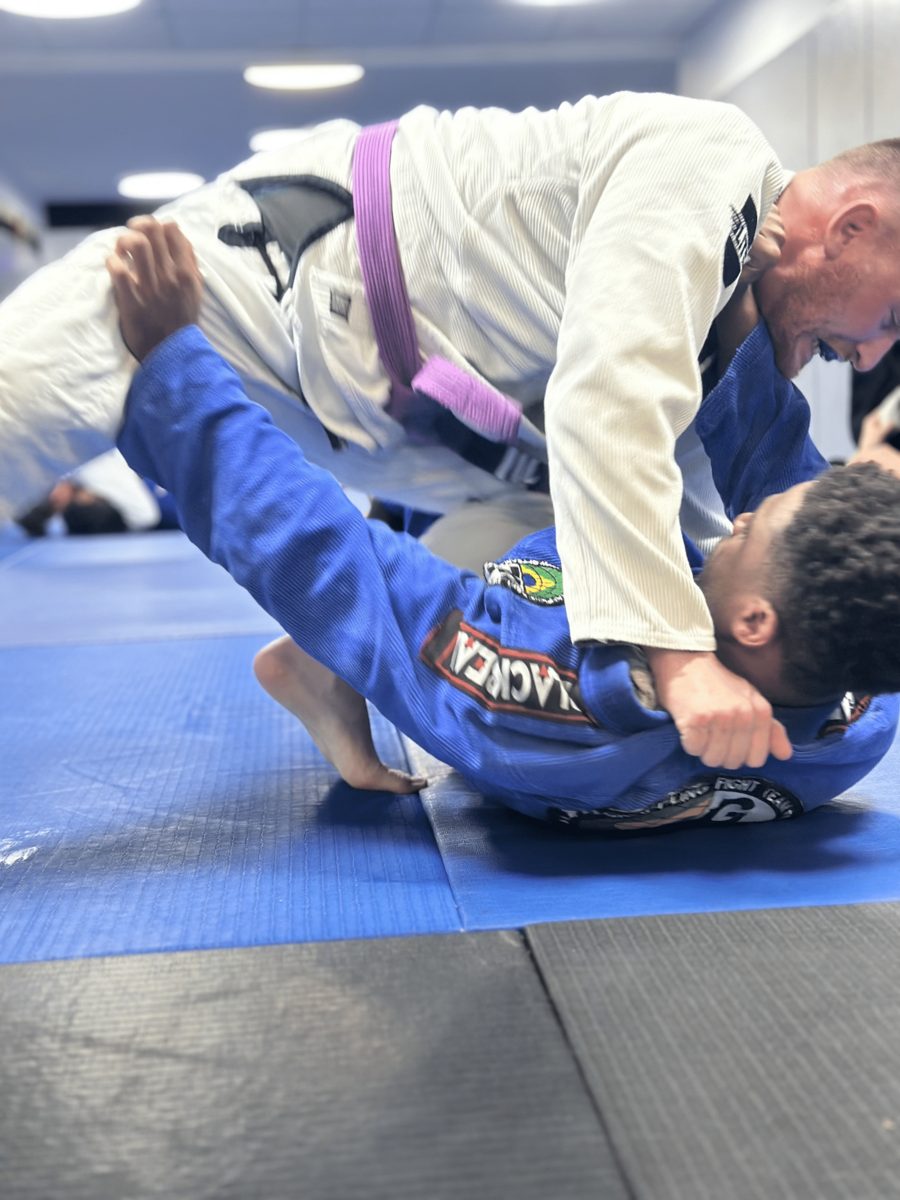
The BJJ Belt System, Explained: How Belts and Stripes Actually Work
Five belts, four stripes at a time, and no shortcuts — here is what the colors around everyone’s waist actually mean, how a promotion really gets decided, and how long each step honestly takes.
Walk into any Brazilian jiu-jitsu class and the first thing you can read is the belts. White belts cluster near the coach, listening hard. A purple belt is quietly taking a round apart in the corner. The black belt running class earned that belt over about a decade. But what do the colors actually certify? How do the little stripes on the end of a belt work, who decides when one changes, and how long does any of it really take? Parents ask us the same questions about the kids’ colors, which run on a completely different ladder. Here is the whole system, explained the way we run it at WDC BJJ in Takoma Park — honestly, including the parts that take years. Our Belt Journey page draws the full map; this post explains what the map means.
The five adult belts, in order
Adults climb five belts: white, blue, purple, brown, and black, in that order, with no skipping. Each belt has a job. White belt is survival: you learn the positions — guard, mount, side control, the back — how to fall safely, how to escape the bad spots, and how to tap early and without ego. Blue belt is where defense becomes a game: your escapes start working against other beginners, your guard stops being a place you endure and becomes a place you attack from, and single moves start chaining together. Purple and brown are the long belts, where students spend years deepening a personal game — sharpening favorite positions, rounding out weak sides, and learning to impose their jiu-jitsu on resisting partners. Black belt certifies all of it: a complete, tested understanding of the art, earned over years of live training. It is the start of mastery, our students like to say, not the end of learning. Our post on the white belt to blue belt journey walks through that first leg in detail.
Stripes: the road in small pieces
Between each pair of belts, students earn up to four stripes — small pieces of tape on the end of the belt that mark progress in steps small enough to feel. A stripe is not a participation trophy. It is the coach recording, in public, that your attendance, attitude, and skill have added up to a real step: you are closer than you were. Stripes matter because the gaps between belts are measured in years. Without them, a student could train hard for eighteen months with nothing to show for it but their own memory. With them, the belt itself keeps the record — and every student in the room can read exactly where everyone stands, which is part of how a room full of strangers becomes a team with a shared map.
How a promotion actually gets decided
Promotions at WDC BJJ are the coach’s decision, based on three things: attendance, attitude, and skill. Attendance, because jiu-jitsu is learned by showing up — mat hours are the raw material everything else is built from. Attitude, because how you treat partners, listen, and handle a hard round is part of the art itself. Skill, because the technique has to be real: escapes that work, positions held, movements that show up in live practice and not just in drills. Just as important is what promotions are not. They are not scheduled by the calendar, not tied to a fee, and not something you can book a test for. Two students who start the same month may be promoted months apart, and both are on a perfectly healthy path. That standard is deliberate: a belt has to mean the same thing in every serious gym in the world, or it means nothing anywhere. When a student is ready, the promotion happens in class, in front of the teammates who made it possible.
Kids climb a different ladder
Children do not wear the adult belts. Kids progress through their own system: white, then the gray family — gray-white, gray, and gray-black — then the yellow family, the orange family, and the green family, earning up to four stripes between belts, just like adults. The adult ladder begins in the teen years, so a child who starts young has a long, full childhood of jiu-jitsu ahead, with real milestones all the way, before the adult colors even begin. That is by design: a black belt is an adult achievement, and the kids’ system gives young students years of earned recognition on the way there. Coaches judge kids on the same three things — attendance, attitude, and skill — and our post on kids’ belts and stripes explains how parents can help: bring them consistently, let the coaches coach, and celebrate effort at home more than rank.
How long does it all take?
Honestly: years, and that is the point. Blue belt commonly takes around two years of steady training — two classes a week, week after week. Purple and brown take longer. For most adults who train consistently, black belt takes around ten years in total; some take eight, plenty take twelve or fifteen, with jobs, kids, and life in between. The biggest variable is simply consistency: a student training three times a week accumulates mat hours at triple the rate of a once-a-week student, and belts follow hours more than calendars. Anyone who promises you a fast black belt is telling you something about their school, not about the belt. Most students find, somewhere around blue or purple, that the question changes anyway: the stripes stop being a countdown and start being a record — of the ordinary Tuesdays, the hard rounds, and the partners who became friends.
Every black belt started at white
Wherever the road leads, it starts in the same place: one class, in a borrowed spot on the mat, wearing the belt every single person in the room wore first. Your first class at WDC BJJ is free — a real group class at 720 Erie Ave in Takoma Park, in athletic clothes with a water bottle, nothing else needed. Book a free class or call (202) 636-3453, arrive 15 minutes early, and put your first hour on the clock. The belt system will explain itself from there — one stripe at a time.
Your first class is free.
A real group class with your own group. No experience needed, no payment, no contract for a trial — and enrollment includes a free uniform.
1. Send the free-trial request or call (202) 636-3453.
2. We confirm the right class for your age and schedule.
3. Arrive 15 minutes early in athletic clothes with water.
4. Train a real class — then decide with zero pressure.
The BJJ belt system, answered
For adults: white, blue, purple, brown, and black — five belts, climbed in that order, with no skipping. Between each pair of belts, students earn up to four stripes, small marks on the end of the belt that show the road in pieces. Children climb a different ladder of their own — the gray, yellow, orange, and green families, each with stripes — and the adult belts begin in the teen years.
Each belt is measured in years, not months. Blue belt commonly takes around two years of steady training — two classes a week, week after week. Purple and brown are the long belts, where students spend years deepening their game. Black belt takes most adults who train consistently around ten years in total; some take eight, plenty take twelve or fifteen with jobs, kids, and life in between. There is no fixed timeline at our academy, and any school that promises you a fast black belt is telling you something about the school, not the belt.
Promotions at WDC BJJ are the coach’s decision, based on three things: attendance, attitude, and skill. There is no exam to book and no fee to pay, and time served alone does not earn a belt — a student who trains twice a week for two years is a different student from one who appeared twice a month. When a student is ready, the promotion happens in class, in front of the teammates who made it possible.
No — children progress through their own belt system: white, then the gray family (gray-white, gray, gray-black), the yellow family, the orange family, and the green family, earning up to four stripes between belts. Coaches judge kids on the same three things — attendance, attitude, and skill — and promotions are never scheduled by the calendar or tied to a fee. The adult ladder begins in the teen years, so a child who starts young has years of real milestones ahead before the adult belts even begin.
Send the free-trial request or call (202) 636-3453, and we will confirm the right class for your age and schedule. Arrive about 15 minutes early in athletic clothes with a water bottle and check in at the door. You train a real group class — no payment and no contract for a trial, and no uniform needed to try. If you decide to enroll, the uniform is included free, and your own belt journey starts at white, the same place every black belt in the room started.