BJJ Etiquette: The Unwritten Rules Every New Student Should Know
The techniques take years. The etiquette takes one read. These are the customs that keep a room full of people practicing chokes on each other safe, clean, and genuinely friendly.
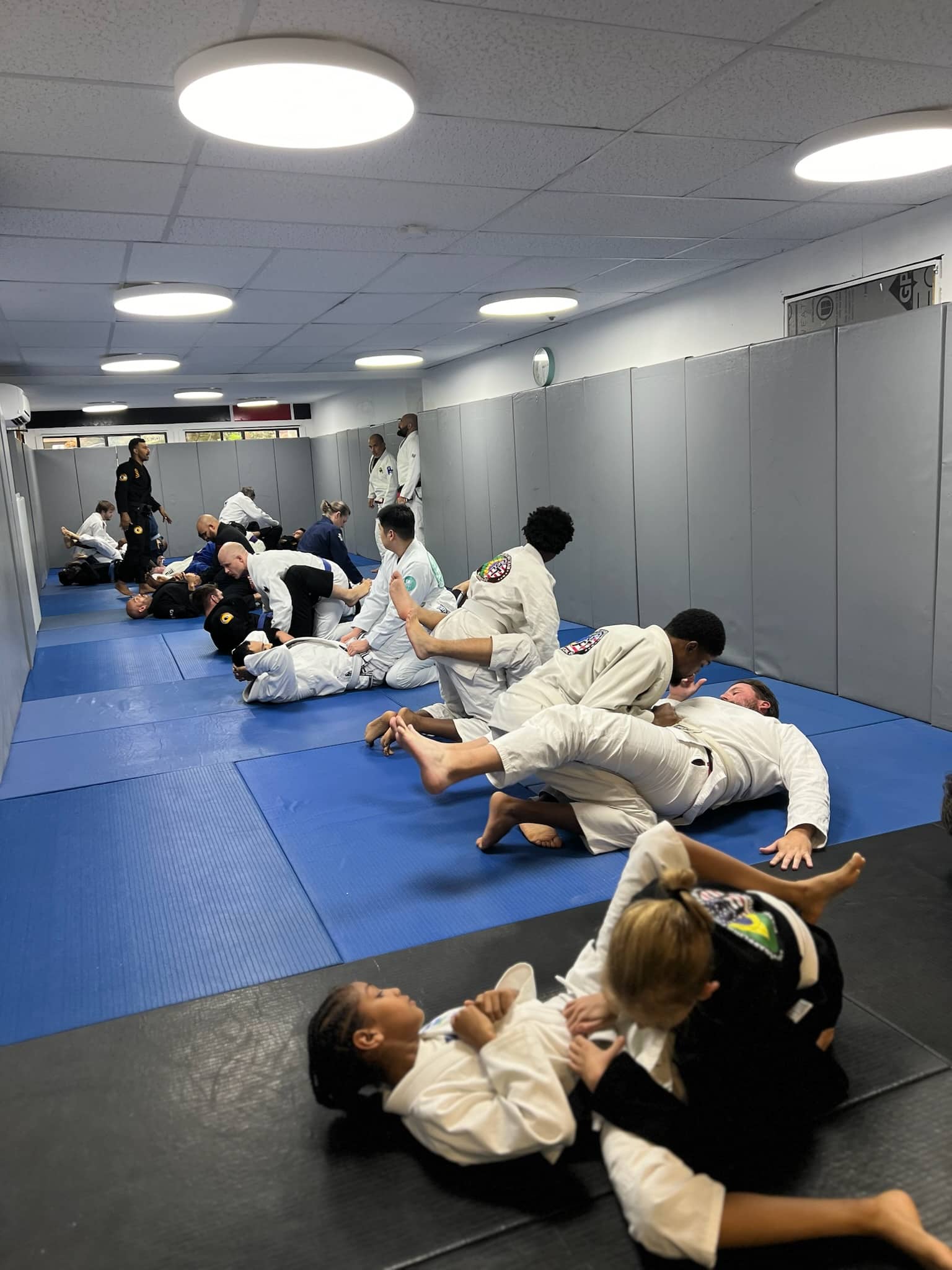
Every jiu-jitsu academy runs on two curriculums. One is techniques, and it takes years. The other is etiquette — a set of unwritten rules nobody hands you at the door — and it takes about a week to learn, once somebody explains it. New students are rarely told these rules outright, which is a shame, because most first-month awkwardness is just not knowing them yet. So here they are, written down, the way we run things at WDC BJJ in Takoma Park. None of this is about being formal for its own sake. Every rule on this list exists for one of three reasons: safety, hygiene, or making sure the person across from you wants to train with you again tomorrow.
On and off the mat
We bow when we step onto the mats and when we leave them. It takes one second, and it marks a real boundary: off the mat is the world — shoes, phones, street clothes, the day you had. On the mat is training. Shoes never touch the mats, and bare feet never touch the bathroom floor — wear sandals anywhere off the mat, every time, no exceptions for “just a second.” That one habit is what keeps the surface everyone’s face gets pressed into clean. Line up by rank when class starts and ends, listen while the coach is teaching — save questions for the pause, and ask them, because questions are welcome here — and when the coach calls time, stop where you are, even mid-technique. Especially mid-technique.
Take care of your body, take care of the room
Our hygiene rules are simple dojo rules, the same for everyone, and they are all about respect for your partners. Arrive in a clean gi — washed after every class, no exceptions. Keep fingernails and toenails trimmed short, because long nails cut partners. Shower after training. Tie long hair back. Take jewelry off before class. If you are sick, stay home and rest — the mats will be here when you are well, and your partners will thank you. If you notice any skin issue, tell a coach before class so we can point you the right way. None of this is complicated, and none of it is optional, because close-contact training only works when everyone in the room can trust everyone else’s habits. A clean academy is a team project, and every student is on the team.
The tap is sacred
The most important rule in the building: when your partner taps, everything stops — instantly, completely, no finishing the motion, no “just checking.” The tap is how a room full of people can practice genuinely dangerous techniques on each other for years without anyone getting hurt, and it only works if it is absolute. The other half of the rule is yours: tap early and tap clearly. Tap the partner’s body where they can feel it, tap the mat, say “tap” — any of them, loudly enough to register. There is no shame column in the record book for taps; every black belt has tapped ten thousand times. Ego is the only real injury risk a beginner brings into the room. Leave it at the door with your shoes, and you will be welcome in every round.
How to be a good training partner
Your partner is not your opponent in class; they are your equipment, your teacher, and your responsibility, all at once. Match their size and intensity — if you are bigger, your job is control, not demonstration. When drilling, give the resistance the drill asks for: not a dead fish, not a fight. During live rounds, save the coaching for after the round — mid-roll advice from the sidelines or from the person choking you helps nobody — and if you are experienced and paired with someone new, your job is to make their round useful, not to collect submissions. Thank your partners. Shake hands. The students everyone wants to train with are not the most talented ones; they are the ones who are safe, clean, and glad you are there. Be that student and the room will carry you a long way.
Ask, watch, belong
The last rule is the easiest: ask questions. Ask the coach what you did wrong. Ask the higher belt who just caught you what they saw. Ask where the sandals go. Nobody at WDC BJJ will ever be annoyed by a sincere question — this is a family-owned academy, and teaching is the entire point of the building. You will still get things wrong in your first month; everyone does, and the room has patience for all of it, because every person correcting you was corrected on the same thing once. If you want the full picture of day one, our first-class guide walks through the whole visit, and our post on your first month as a beginner covers what comes after. Your first class is free — send the free trial request or call (202) 636-3453. Come as you are; we will teach you the rules as we go.
Your first class is free.
A real group class with your own group. No experience needed, no payment, no contract for a trial — and enrollment includes a free uniform.
1. Send the free-trial request or call (202) 636-3453.
2. We confirm the right class for your age and schedule.
3. Arrive 15 minutes early in athletic clothes with water.
4. Train a real class — then decide with zero pressure.
New-student etiquette, answered
It takes one second and it is simply how we mark stepping into training — the same spirit as shaking hands with a partner, which we also do. Nobody is worshipping anything; you are acknowledging the room and the people in it. It will feel automatic within two weeks, we promise.
Tap as soon as you feel a submission is on — early is always fine, and your partner stops the instant you do. If something ever feels wrong — a joint hurting, trouble breathing — tap and say so out loud. Coaches watch every round, and the culture here treats tapping as good judgment, never as losing.
Nails need to be trimmed short before class — long nails genuinely cut partners, so this one is firm. Jewelry comes off for training; if a ring truly cannot be removed, tell a coach and we will tape it or work around it for the trial class. These are safety basics, handled without any fuss.
Stay home and rest — that is the rule, and it protects the whole room. There is no attendance penalty and no falling behind that a week can cause. The mats, your partners, and your usual class will all be here when you are well.
Send the free-trial request or call (202) 636-3453, and we will confirm the right class for you. Arrive about 15 minutes early in athletic clothes with a water bottle — no uniform needed to try, and sandals for off the mat if you have them. You join a real group class, with no payment and no contract for a trial. If you enroll, the uniform is included free.