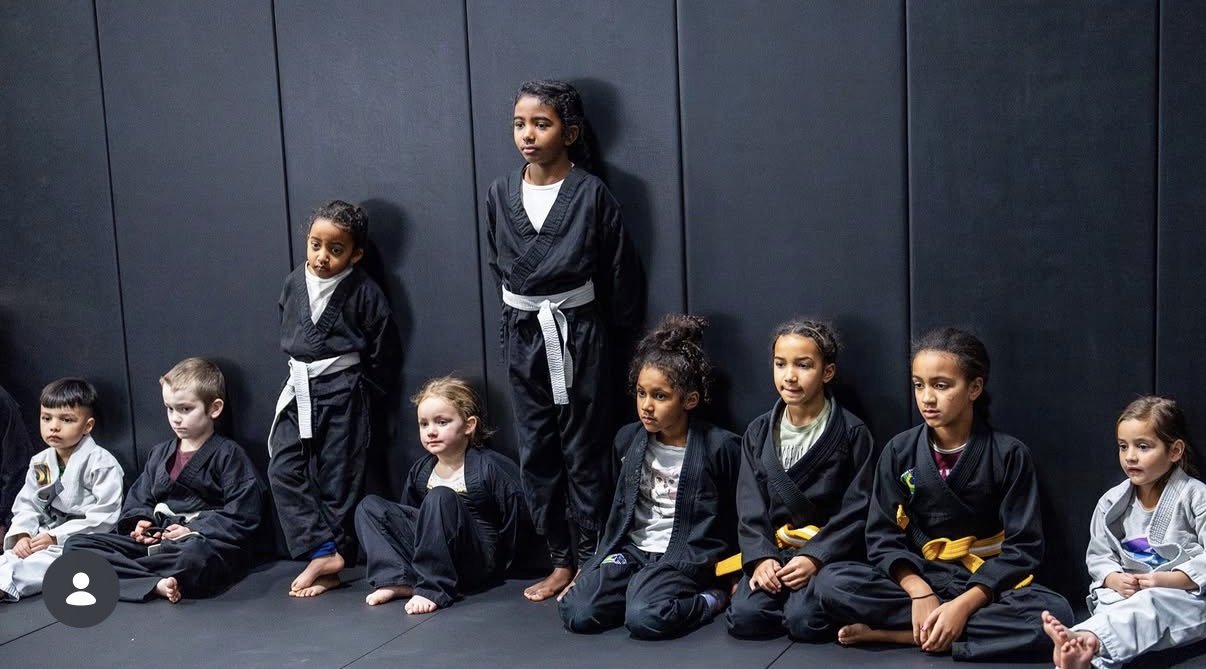
Not a Team-Sports Kid? Why BJJ Works When Soccer and Basketball Don’t
No bench. No ball that never comes. No season riding on one position. Jiu-jitsu is an individual sport with a team’s heart — and for a lot of kids, that is the combination that finally clicks.
Every season, some version of this family finds us in Takoma Park. Their child did soccer and spent the games on the bench or wandering the far corner of the field, picking at the grass. They did basketball and flinched when the ball came their way. The child is not lazy and not unathletic — they light up on a bike, in a pool, on a climbing wall. Team sports simply never gave them a job they could own. Parents usually arrive feeling like they have to fix their kid’s relationship with sports. Our honest answer: your kid might be fine. The format might be wrong. Jiu-jitsu is built on a different format, and it fits a whole category of children that team sports quietly leave behind.
There is no bench in jiu-jitsu
In a team sport, playing time is a resource somebody else allocates. The strongest kids get the ball, the ball finds the same feet, and the child who needs the most practice gets the least of it — at exactly the age when practice is the whole point. On our mats, nobody allocates your child’s reps. Every drill is done with a partner, every child practices every technique, and live training means everyone is in, every round. The quiet kid and the loud kid get the same number of turns, because the format guarantees it. A child who has spent two seasons watching other children play can feel the difference in one class: here, the activity cannot happen without them.
Progress at their own pace — visibly
Team sports measure a child against the scoreboard and the other children. Jiu-jitsu measures a child against who they were last month. Stripes and belts are earned for attendance, attitude, and skill, and they arrive one at a time, in front of the room, at whatever speed the child actually improves. There is no being cut, no depth chart, no season where a growth spurt on another kid ends yours. A smaller, later-developing child can be excellent here, because the art itself is leverage — it was designed for the smaller person. Parents of kids who “aren’t sporty” often watch their child earn a stripe and realize it is the first athletic achievement that was entirely, provably theirs.
An individual sport with a team around you
Here is the part that surprises parents: the most individual sport in the building produces some of the strongest team feeling. Your child’s progress is their own — nobody can score their points for them — but nobody progresses alone. Every technique needs a partner. Training partners drill together daily, celebrate each other’s promotions, and learn to take care of the person across from them, because that person’s safety is literally in their hands. Kids who found team dynamics exhausting — the politics, the blame after a loss, the star system — often find this version easy to belong to. You are responsible for yourself, and surrounded by people rooting for you. For a lot of children, that is the first team that ever felt like one. See how the program is organized on our kids jiu-jitsu page.
Built for the kid who thinks in systems
Some children are not drawn to chasing a ball but are deeply drawn to puzzles. Jiu-jitsu is a physical puzzle — positions, leverage, sequences, problems that change every time a partner reacts. The kid who loves building things, strategy games, and figuring out how systems work often takes to the mats immediately, because every class is a new problem with a discoverable answer. Coordination develops here too, but it develops attached to thinking, which is why children who looked “unathletic” in open-field sports can look completely different in a grappling room. They were never unathletic. They were un-puzzled.
Try one class before you decide sports aren’t their thing
Before your child concludes they are “not a sports kid,” let them try the one format that is structured nothing like the ones that failed. The first class is free — a real group class, no payment and no contract for a trial, and a free uniform if they enroll. Kids ages 4 to 12 train at 5:00 PM on weekdays in age groups; the youngest, 4 to 6, are our Little Grapplers, and teens 13 to 17 have their own class. Arrive 15 minutes early in athletic clothes with a water bottle, and watch from the side. Send the free trial request or call (202) 636-3453. Plenty of our happiest students are refugees from the bench.
Your first class is free.
A real group class with your own group. No experience needed, no payment, no contract for a trial — and enrollment includes a free uniform.
1. Send the free-trial request or call (202) 636-3453.
2. We confirm the right class for your age and schedule.
3. Arrive 15 minutes early in athletic clothes with water.
4. Train a real class — then decide with zero pressure.
When team sports don’t fit, answered
Never. Competition is an option some students choose later, with coaching support — it is never a requirement and never a surprise. Most kids here simply train, learn, and get promoted in class. The room has competitors in it, and their presence raises everyone’s level without obligating anyone.
It is closer to an advantage in the long run. Jiu-jitsu is leverage — it was built for the smaller person — and partners are always matched by size and experience in class. Small kids often develop the cleanest technique in the room, because they cannot muscle anything and have to do it right.
Coordination is a trainable skill, and this is a good place to train it: falling safely, balancing, moving on the ground, using both sides of the body. It develops attached to problem-solving, which keeps kids engaged long enough for it to develop. Nobody is expected to arrive coordinated; that is what class is for.
The core difference is live practice against a partner every class. Your child is not performing forms alone or waiting for a turn — they are grappling, with resistance, from the first weeks. Progress is felt directly: an escape that failed last month works today. That feedback loop is what hooks kids who drifted in other formats.
Send the free-trial request or call (202) 636-3453, and we will confirm the right class for your child’s age. Arrive about 15 minutes early in athletic clothes with a water bottle — no uniform needed to try. Your child joins a real group class and you can watch the whole time. No payment, no contract for a trial, and the uniform is free if you enroll.