BJJ for Kids With ADHD: What Parents Should Know
Structure without sitting still. One clear instruction at a time, movement built into every minute, and coaches who learn how your child’s brain works — because a lot of them work exactly like it.
Parents of kids with ADHD usually arrive at our door in Takoma Park with the same story. The classroom asks their child to sit still and listen for long stretches, and every day that goes sideways. Team sports ask them to stand in a line, wait for a turn, and track a ball across a field, and that goes sideways too. Then the parent starts to wonder if the problem is their kid. It is not. The problem is the format. Jiu-jitsu runs on a different format entirely — and for a lot of kids with ADHD, it is the first activity that feels like it was built for them instead of against them. This page is an honest look at why, and at what we can and cannot promise.
A class that never asks them to sit still
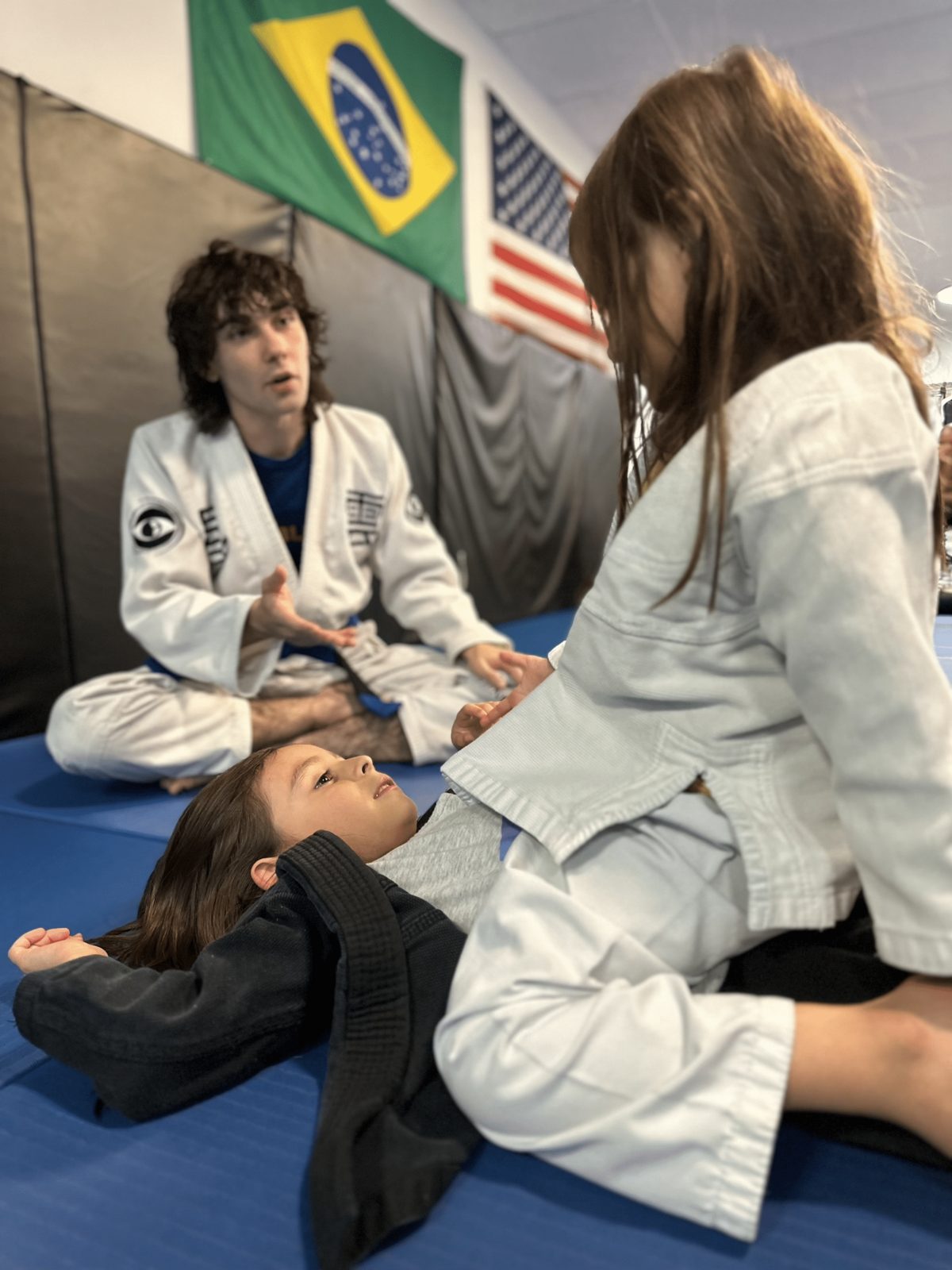
A kids’ class at WDC BJJ is movement from the first minute to the last. Warm-up, technique, drilling with a partner, live practice — the activity changes every few minutes, and there is no bench, no line, and no long lecture to survive. The longest a child sits still is the short moment a coach shows a move, and even then they are watching something physical happen in front of them, not listening to a speech. For a brain that hunts for stimulation, the class itself is the stimulation. Parents tell us their child comes home tired in a way that homework battles and screen arguments never produce — tired in the body, calmer in the head. We cannot promise that for every child. But the structure of the hour is doing real work here.
One clear instruction at a time
Good jiu-jitsu coaching is naturally broken into small pieces. A technique is shown as two or three steps. The coach says one thing: “Hands here.” The kids do it. Then the next thing. Nobody hands a seven-year-old a twelve-step sequence and gets angry when step nine falls apart — the class is built out of short, clear, physical instructions with immediate feedback. Did the grip work? You know in one second, because your partner either moved or did not. That instant cause-and-effect is something kids with ADHD rarely get from a worksheet. Our coaches know every child on the mats by name, and they learn quickly which kids need the instruction repeated, which need a hand placed where it goes, and which just need the next rep. You can see how classes run on our kids jiu-jitsu page.
Focus is a muscle, and reps build it
We need to be careful and honest here: jiu-jitsu is not a treatment for ADHD, and no honest coach will tell you it replaces the support your child’s doctor or school recommends. What training does is give a child thousands of small chances to practice paying attention — and make those chances fun. Holding a position takes concentration. Remembering where your hands go takes concentration. Listening for the coach’s voice in a noisy room takes concentration. A child practices focus the way they practice an escape: in short reps, with a partner, with a result they can feel. Over months, parents often tell us they see carryover — homework started with less fighting, instructions followed the first time more often. We hear it enough to mention it. We would never guarantee it.
Structure they can feel
Kids with ADHD do not need more chaos; they need structure they can predict. Every class here runs the same shape: bow in, warm up, technique, drilling, practice, bow out. The rules are few and they never change — take care of your partner, listen when the coach talks, when someone taps, everything stops. Belts and stripes mark progress slowly and publicly, for attendance, attitude, and skill, so a child always knows what they are working toward and can see that they are getting somewhere. For a kid who hears a lot about what they did wrong at school, a room where progress is visible and named out loud matters more than most adults realize.
What the first class looks like
Your child’s first class is free — a real group class, no payment and no contract for a trial, and a free uniform if you enroll. Kids ages 4 to 12 train at 5:00 PM on weekdays in age groups; our youngest, ages 4 to 6, are the Little Grapplers, and Saturday has a 9:00 AM kids no-gi class. Arrive about 15 minutes early in comfortable athletic clothes with a water bottle, and you can watch the whole class from the side. Tell us about your child when you book — what works, what doesn’t, what their school day looks like. That conversation helps us place them with the right partners and the right coach attention from day one. Send the free trial request or call (202) 636-3453, and let’s see what the mats do for your kid.
Your first class is free.
A real group class with your own group. No experience needed, no payment, no contract for a trial — and enrollment includes a free uniform.
1. Send the free-trial request or call (202) 636-3453.
2. We confirm the right class for your age and schedule.
3. Arrive 15 minutes early in athletic clothes with water.
4. Train a real class — then decide with zero pressure.
Kids with ADHD and jiu-jitsu, answered
Honestly: it is not a treatment, and we will never sell it as one. What class gives a child is structured movement, short clear instructions, and thousands of fun chances to practice focus with instant feedback. Many parents tell us they see carryover at home and school — started homework, followed instructions, calmer evenings. We hear it often enough to say it happens. We would never promise it for your child specifically.
They will not be the first, and the class is built for movement — there is no bench and almost no sitting. Coaches redirect with a job, not a lecture: hold this, carry that, show me the move. A child who needs to move is usually the easiest kind of child to coach in this room, because the whole hour is moving.
Partners are matched by size and experience, coaches are on the mats the whole class, and the first rule every child learns is that when a partner taps, everything stops instantly. Techniques are taught with control, and roughhousing outside the drill is corrected the first time. Every child here is somebody’s kid, including to us.
Kids ages 4 to 12 train in age groups at 5:00 PM, Monday through Friday; ages 4 to 6 are our Little Grapplers, and Saturday has a 9:00 AM kids no-gi class. Teens 13 to 17 have their own dedicated class. If your child is on the edge of an age group, call us — placement is about the child, not just the birthday.
Send the free-trial request or call (202) 636-3453 and tell us a little about your child. Arrive 15 minutes early in athletic clothes with a water bottle — no uniform needed to try. Your child joins a real class and you can watch the whole thing. No payment, no contract for a trial, and the uniform is free if you enroll.