Your Child’s First BJJ Tournament: A Parent’s Guide
The registration is in and the date is circled. Here is what the day actually looks like — check-in, weigh-in, warm-ups, matches, and the long waits in between — and how to make it a good day, whatever the results.
The decision is made: you and your child talked it over with their coach, the registration is in, and a date on the calendar now says ‘tournament.’ What happens between now and the handshake at the end of their first match? This guide is about the day itself — the practical side of a first Brazilian jiu-jitsu competition: the night before, what to pack, how the hours at the venue actually flow, and what your child needs from you while it all happens. If you are still at the earlier question of what a kids’ competition is and whether your child should enter one at all, start with kids’ BJJ competitions, explained for parents — this guide picks up where that one ends.
Before the day: three short jobs
First, confirm the registration details. Your child is entered in a division — in gi divisions, matched by age, weight, and belt; in no-gi divisions, by age, weight, and experience level — so check that the details on the confirmation match your child as they are today. Register them at the weight they actually weigh, fed and hydrated: children compete at their natural weight, and no child at WDC BJJ cuts weight, ever. Second, read the event’s own rulebook together. Every organizer publishes one, the details do vary between events, and a child who has heard the rules at the kitchen table hears nothing surprising at the venue. Third, ask the coach anything that is unclear while there is still time — that is exactly what their coach is for, and it is the same coach who judged them ready in the first place.
What to pack the night before
Pack the evening before, not in a morning scramble: a clean gi and their belt, a water bottle, and real food. Tournament days run long, with waits between matches, and venue food is an unknown — a child who is fed and hydrated feels better and competes better. Add something quiet for the waiting stretches, like a book, because waiting is a real part of the day. Then check the event’s listing one last time for its check-in times and anything specific it asks competitors to bring. That is genuinely the whole list — a first tournament needs preparation, not equipment.
How the day actually flows
Plan to arrive early, with time to spare. Your child checks in and weighs in for their division, you find where their bracket will be called, and then, most likely, you wait. Schedules at tournaments slip — a division expected at one time can run earlier or later — and families who expect that find the day far calmer. When your child’s division is called, they warm up and get ready with their coach’s guidance. Then their name is called: they step on the mat, shake hands with the referee and their opponent, and compete for a set number of minutes while their coach is in their corner, calling what they see. A submission — making an opponent tap — ends the match immediately; otherwise, matches are decided on an IBJJF-style points system, with takedowns, sweeps, and position control scoring points. Win or lose, the match ends the way it began, with a handshake.
During the match: your one job
Your child’s coach is in their corner for a reason: one clear voice is what a child can actually use in the middle of a match. Two sets of instructions at once — yours from the stands, the coach’s from the corner — usually just adds noise at the exact moment they are trying to listen. Your job is different and just as important: be the calm, steady presence they can look over at between exchanges. Cheer the effort you see. Let the coach coach, and let the result belong to your child. That restraint is harder than it sounds on the day, and it is one of the most useful things a parent gives a young competitor.
Between matches — and after a loss
After each match, check the bracket before you settle in: win and your child advances, so the day may not be over. If a match ends in a loss, keep the first minutes simple. Lead with effort — they stepped on the mat, against someone new, and that took something real. Skip the technical breakdown; there is a coach for that, later, back in class. And hold the long view: a loss does not change how a child progresses. As we explain in how kids’ belts and stripes work, promotions at WDC BJJ are the coach’s decision, based on attendance, attitude, and skill over time — a loss is not a setback, and no honest school can promise a medal, because brackets and opponents are never in anyone’s control. What a first tournament gives a child, medal or not, is a clear picture of what worked under pressure and what to work on next — and every competitor takes that home.
When nerves take over
Nerves before a first tournament are completely normal — most children feel them, and so do most adults before theirs. Talk it through plainly: short matches, against children their own age, size, and level, with their coach in their corner, and you right there. That picture settles most nerves. But if, after the conversation, your child genuinely does not want to compete, that answer stands. Competition is optional at WDC BJJ — always — and no child’s training or promotions depend on it. Talk to their coach, let the day pass without pressure, and regular classes continue exactly as before. A first tournament should be something a child walks into willingly; that willingness is what makes the day worth having.
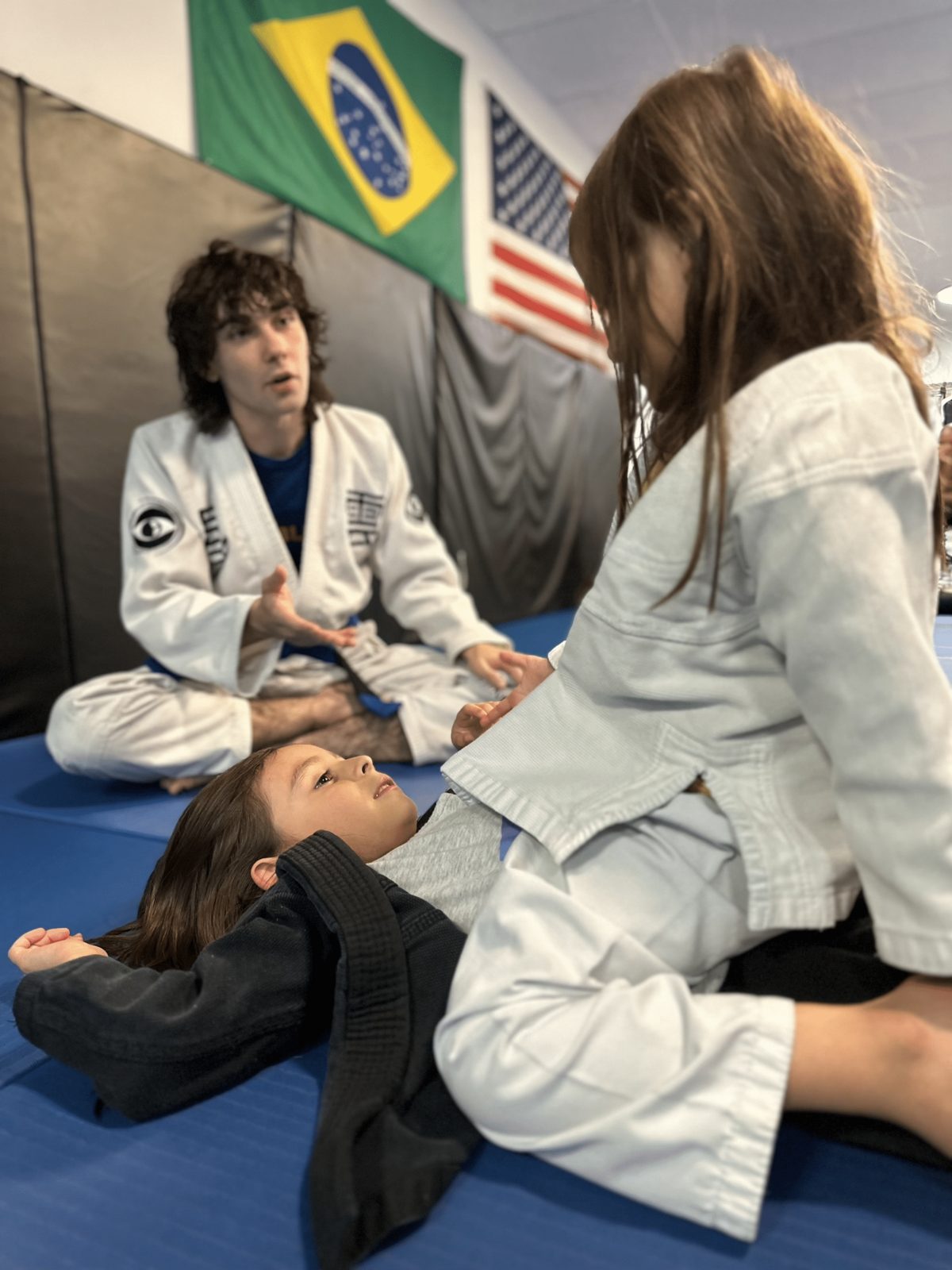
Every competitor at WDC BJJ started the same way your child would on an ordinary week: in a regular class in our kids jiu-jitsu program, learning the basics alongside kids their own age and size, long before any tournament came up. If your child is not training yet, that class — not a competition — is the place to begin. A first class at our academy at 720 Erie Ave in Takoma Park is free, a real group class with their own age group, and you can watch from the side of the mat. Book a free class, let them train, let them settle in — and if a tournament ever comes, it will come the right way: their idea, their coach’s judgment, and a day you are all ready for.
Your first class is free.
A real group class with your own group. No experience needed, no payment, no contract for a trial — and enrollment includes a free uniform.
1. Send the free-trial request or call (202) 636-3453.
2. We confirm the right class for your age and schedule.
3. Arrive 15 minutes early in athletic clothes with water.
4. Train a real class — then decide with zero pressure.
First tournament, answered
Plan to arrive early, with time to spare. Your child needs to check in and weigh in for their division before their bracket is called, and tournament schedules slip — a division that was expected at one time can run earlier or later. Arriving early and expecting to wait is the calm version of the day; arriving rushed is the stressful one. The event's own listing publishes the check-in times for the day, so check it the night before and build in a buffer.
Start with the basics: a clean gi and their belt, a water bottle, and real food — tournament days run long, with waits between matches, and a fed, hydrated child competes better and feels better. Add something quiet for the waiting stretches, like a book. Then check the event's own rulebook and listing before you pack, because each organizer sets its own requirements for the day. One rule never changes: register your child at the weight they actually are. Children compete at their natural weight at WDC BJJ — no child cuts weight, ever.
Your child's coach is in their corner for the match, calling what they see — one clear voice is what a child can actually use in the middle of a match. Two sets of instructions at once, yours and the coach's, usually just adds noise. Your job is different and just as important: be the calm, steady presence they can look over at, cheer the effort you see, and let the result belong to them. That is the role that helps, before, during, and after every match.
Keep it simple and keep it about effort first: they stepped on the mat, they competed, and that took something. Skip the technical analysis in the first minutes — there is a coach for that, later, in class. A loss does not change anything about how your child progresses at the academy: belts and stripes at WDC BJJ are the coach's decision, based on attendance, attitude, and skill over time, so a loss is not a setback and a medal is not a shortcut. What a first tournament gives a child either way is experience — a clear picture of what worked under pressure and what to work on next.
Nerves before a first tournament are completely normal — most children feel them, and so do most adults. Talk it through, and remind them what the day actually is: short matches against children their own age, size, and level, with their coach in their corner. But if, after that conversation, your child genuinely does not want to compete, that answer stands. Competition is optional at WDC BJJ — always — and no child's training or promotions depend on it. Talk to their coach, let the day pass without pressure, and their regular classes continue exactly as before.