Does BJJ Build Focus and Discipline in Kids? What Class Structure Actually Does
Parents ask whether jiu-jitsu will help a child listen, settle, and follow through. The honest answer starts with what class actually asks a child to do — the same routine, the same small rules, and one technique taught in small steps, practiced every week.
Focus and discipline are the two words parents use most when they first call our academy in Takoma Park — usually followed by an honest question: will jiu-jitsu actually help with that? This page gives the careful answer. Brazilian jiu-jitsu is a physical class, not a treatment, and no honest coach can promise how any individual child will change. What a coach can describe, exactly, is what a structured class asks a child to do for 45 minutes: line up, listen, follow steps in order, take turns, and respect a partner. Those are the pieces of focus and discipline, and in a kids BJJ class they are not talked about in the abstract — they are practiced, in the same order, every single class.
The routine itself does the first part of the work
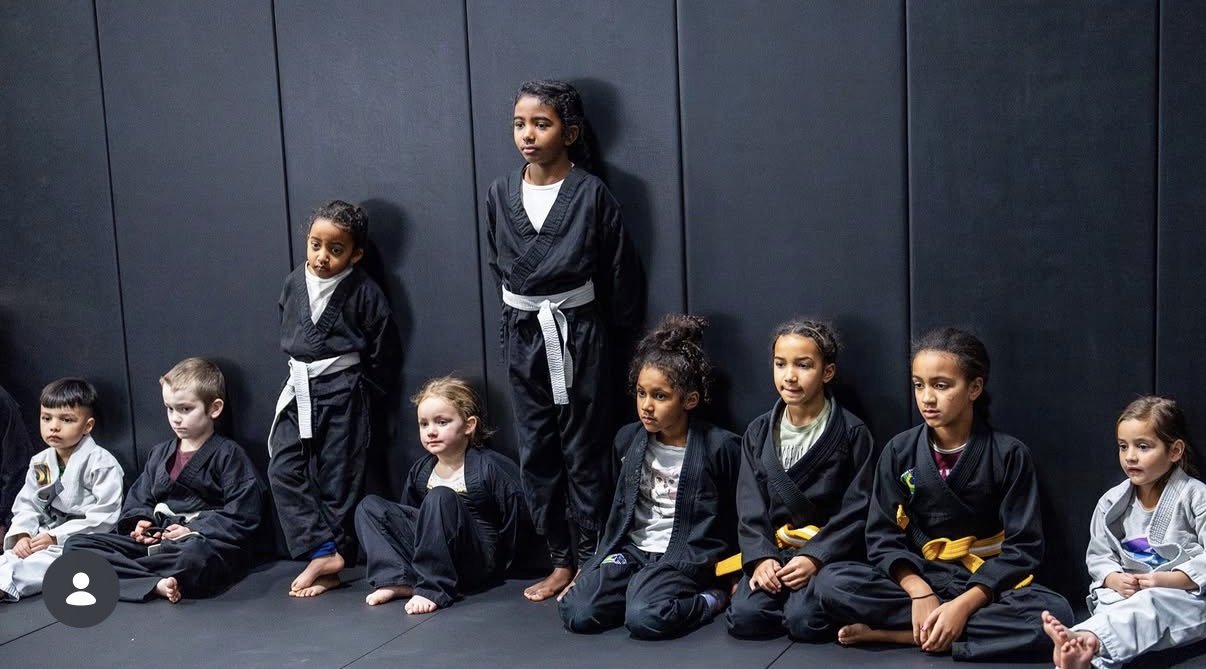
A kids class at WDC BJJ follows the same arc every time, on purpose. Children come in, line up at the edge of the mat, and bow in together — the moment the room switches from playground energy to class energy. Then movement and warm-up, one technique taught by the coach, partner practice, and a bow out to finish. Our kids jiu-jitsu classes for ages 4–12 run Monday through Thursday at 5:00–5:45 PM, with a Saturday 9:00 AM class for younger and smaller kids, and children are grouped by age and size. A predictable order matters because a child who knows what comes next does not spend the class guessing. The routine carries part of the load, so the child’s attention is free for the part that is actually new: today’s technique. You can see that arc step by step in our walkthrough of what happens in a kids BJJ class.
Listening in class is short, specific, and followed by doing
Class never asks a young child to listen for twenty minutes. The coach gathers the group, shows one technique slowly and in small steps, and answers questions there — then the children get up and do it. Listening has a job: hear the first step, watch where the hands go, remember what comes second. If a step is missed, it shows up kindly and immediately, because the movement does not work — and the coach, moving from pair to pair, helps the child find it. That cycle of listen, try, adjust, and try again repeats all class long, in short rounds a child can actually manage. For our youngest students, in Little Grapplers for ages 4–6, the listening moments are shorter still and the learning happens through movement and games, because that is what fits that age.
Follow-through is built into the drilling
A technique in jiu-jitsu is a sequence: grip, step, turn, finish — in that order, or it falls apart. Drilling asks a child to start the sequence, stay with it when the middle gets confusing, and complete it, then switch roles and be a good partner while the other child does the same. Nobody is born patient with that process. It is trained the way anything physical is trained: repetitions, at walking pace first, with a partner their own age and size and a coach watching every group. The follow-through a parent can actually observe is concrete — a child who restarts a sequence instead of giving up on it, who waits for a partner to be ready, who finishes the drill before asking what is next.
Discipline here means small rules, kept the same way every class
Discipline in our room is not a lecture and it is not raised voices. It is a short list of rules that never changes: line up when class is called; listen while the coach is talking; wait for your turn; treat your partner carefully; and stop the instant anyone taps, taps the mat, or says stop. That last rule — the tap — is taught before any technique and respected without exception, and it teaches something real about self-control: even mid-scramble, excited and out of breath, a child stops on the signal. Rules like these work because they are few, physical, and identical in every class, so a child is not relearning the expectations each week — they are practicing keeping them.
The honest limits: what no class can promise
Here is what we will not claim. We cannot promise that focus practiced on the mat will show up as better grades, easier homework, or different behavior at home — children are different, weeks are different, and a sports class is one part of a child’s life, not a lever that moves all of it. Jiu-jitsu is also not a medical treatment or a therapy, and our coaches do not diagnose or treat any condition. What parents tell us they notice first is smaller and more believable: a child who knows the routine without being reminded, who listens through a demonstration, who keeps working at a sequence that failed twice. Those are in-class habits, built by showing up regularly — and they are the honest thing to judge a program by.
What helps from the parent’s side
Parents support the structure best by keeping the outside of class as steady as the inside: the same class days each week, a snack and the uniform ready, arrival a few minutes early so a child walks in settled rather than rushed. Notice the specific, controllable things out loud — “you listened the first time,” “you kept trying that escape” — because children repeat what the adults around them notice. And let the coach handle the mat rules during class; a child hearing instructions from two directions follows neither. Questions and concerns belong in a word with the coach after class, where they can actually be addressed.
See the structure yourself in one free class
The fastest way to judge any of this is to watch one class run. A first class at WDC BJJ is free — a real group class with your child’s own age group, not a private sales session — and parents watch from the side of the mat, so you can see the routine, the listening moments, and the rules working in real time. WDC Brazilian Jiu-Jitsu is at 720 Erie Ave in Takoma Park. Book a free class or call (202) 636-3453 — come and watch what the structure of class actually asks of a child, and decide from what you see.
Your first class is free.
A real group class with your own group. No experience needed, no payment, no contract for a trial — and enrollment includes a free uniform.
1. Send the free-trial request or call (202) 636-3453.
2. We confirm the right class for your age and schedule.
3. Arrive 15 minutes early in athletic clothes with water.
4. Train a real class — then decide with zero pressure.
BJJ, focus, and discipline, answered
No honest coach can promise that, and we will not. What a kids BJJ class does is practice the pieces of focusing, over and over, in a physical setting: line up when class is called, watch a short demonstration, listen for the steps, then do them in order with a partner. That practice is real, and parents can watch it happen from the side of the mat. Whether and how it carries into school or home is different for every child — what we can show you is exactly what your child will be asked to do in class, and how the structure supports it.
Here it means small, repeatable rules, the same in every class — not shouting, and not punishment. Line up and bow in together. Listen while the coach is talking. Wait for your turn in the drill. Treat your partner carefully. Stop the instant anyone taps. Bow out at the end. None of those rules is dramatic on its own; the discipline is in doing them every class, on tired days and excited days alike, until they become the normal way the room works.
There is no honest timeline, and anyone who gives you one is guessing. The first changes a parent can actually see are usually inside the room: a child who knows where to line up without being told, who listens through the whole demonstration, or who finishes a drill sequence in order. Those in-class habits come from regular attendance — our kids classes run Monday through Thursday at 5:00–5:45 PM for ages 4–12 — and they build at different speeds for different children. If you are wondering how your child is doing, ask the coach; the coach watches those details every class.
No. Brazilian jiu-jitsu is a physical activity and a martial art class — it is not a medical treatment, it is not therapy, and our coaches do not diagnose anything. Families make their own decisions about professional support for a child, and a sports class does not replace that. What we can describe, plainly, is the structure of class itself: a predictable routine, short clear instructions, movement between listening moments, and consistent rules with a partner. Judge the class on that structure, and on whether your child enjoys it — not on a medical promise nobody should be making.
Send the free-trial request or call (202) 636-3453, and we will confirm the right class for your child's age and your schedule. Arrive 15 minutes early in comfortable athletic clothes — no pockets or zippers — with a water bottle, and check in at the door. Your child trains a real group class with their own age group; there is no payment and no contract for a trial. Parents watch from the side of the mat, so you can see the routine, the listening moments, and the rules for yourself. Afterwards we walk you through how the program works and answer every question, with zero pressure. If you decide to enroll, the uniform is included free.